
2016 — 2017
FIRST LEGO League — Talence
First steps in robotics
After my first Arduino and Raspberry Pi projects at around 13–14, FIRST LEGO League strengthened my interest in understanding, programming and building robotic systems.
I have been programming since my teens. Arduino, Raspberry Pi and then robotics were my first gateways into electronics and embedded computing.
I initially wanted to become a robotics engineer before choosing a broader education to understand the different aspects of an embedded system.
Over time, I became particularly interested in what happens between raw data and a system's decisions. This became one of Syloria's guiding themes: improving existing firmware through supervision, state management and diagnostics, while maintaining a broader firmware practice.
After my first Arduino and Raspberry Pi projects at around 13–14, FIRST LEGO League strengthened my interest in understanding, programming and building robotic systems.
During my one-week school work-experience placement, I joined INRIA's Flowers team and became familiar with programming a Poppy Ergo Jr. This first experience confirmed my interest in robotics.
I chose a programme combining mechanics, electronics, computing and engineering science so that I would not be limited to a single discipline and could understand a system as a whole.
From September 2022 to September 2025, I worked at Shark Robotics in La Rochelle while studying at Mines Saint-Étienne. I developed modular bare-metal STM32 firmware for a BMS subsystem: drivers, measurement acquisition, CAN communication and fault management. I also contributed to migrating Python tools to ROS 2 and coordinating the Software team's activities. This experience taught me to choose solutions suited to the context, quality requirements, cost and schedule.
With a long-standing desire to start a business, I founded Syloria to keep working on varied challenges while retaining the autonomy I value as an engineer: understanding a need, proposing solutions and seeing them through to results.
My engagements cover firmware rework, CAN/J1939 communication, diagnostics and fault management. They have strengthened Syloria's focus on improving the reliability of existing firmware, supervision and diagnostics, while retaining a broader firmware foundation.
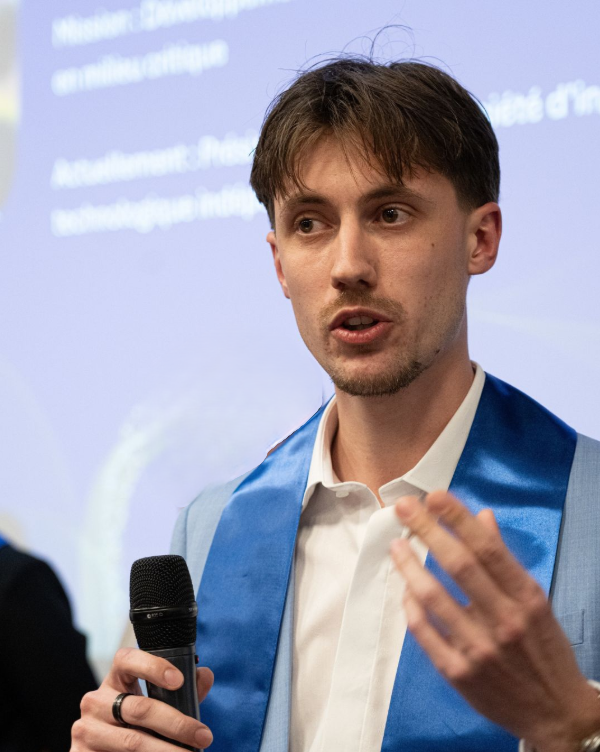
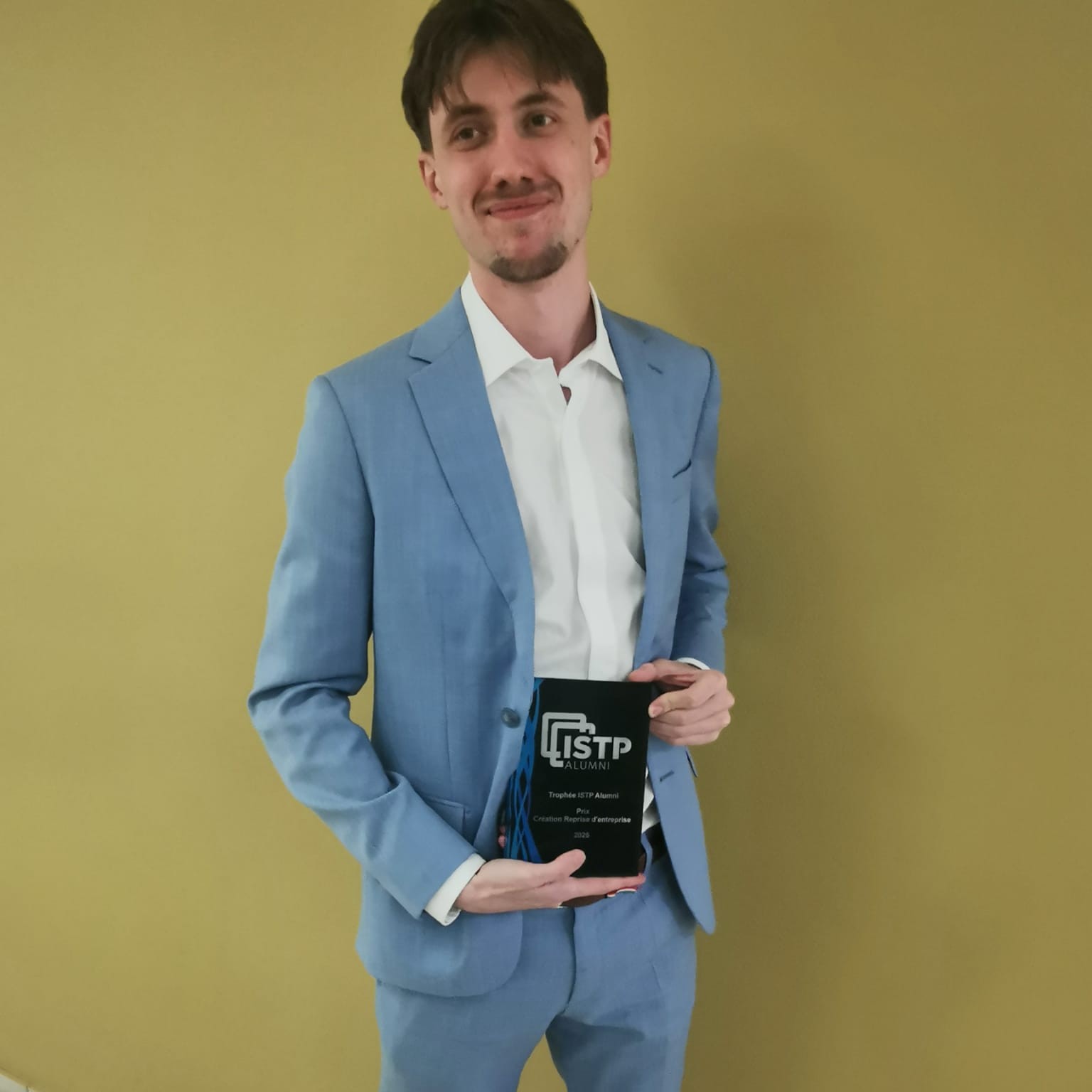
In 2026, I received the ISTP Alumni Award in the ‘Business Creation’ category at my engineering graduation ceremony.
Above all, this award marks an early milestone in Syloria's development and the transition from a long-standing entrepreneurial ambition to a practical business built through client engagements.
I see it as encouragement to continue developing Syloria and deepening my expertise in embedded-system reliability, supervision and diagnostics.
A solution only makes sense in its context
Two solutions can both be technically sound without addressing a product's needs in the same way. My approach is to first understand the existing behaviour, constraints and goal, then choose a solution proportionate to the problem rather than unnecessarily rebuilding what already works.
Let's spend 30 minutes discussing your existing system: its context, the difficulties you face and some initial options. A simple conversation with no obligation.